


More Than After-School Activities: How Military-Patriotic Clubs Prepare Soldiers for Russia
When it comes to the militarisation of Ukrainian children in the temporarily occupied territories of Ukraine (TOT), the organisations most often mentioned are “Young Army” (“Yunarmia” – also widely referred to as the “Youth Army”), “Movement of the First”, cadet and Cossack classes, and the “Voin” (“Warrior”) and “Avangard” centres. And this is hardly surprising: these are the structures that feature most often in media coverage, studies and reports by Ukrainian and international organisations, since they play a key role in carrying out Russia’s policy of patriotic education for children and young people. Far less attention, however, is paid to military-patriotic clubs (MPCs), whose network has expanded rapidly in recent years and is becoming increasingly integrated into Russia’s system of patriotic education for children and young people.
At first glance, MPCs may look like ordinary after-school clubs where children are taught physical fitness, outdoor skills or basic first aid. Yet an analysis of their activities in Russia and in the TOT shows that they serve a much broader purpose and are one of the key links in drawing children and young people into service in the Russian Armed Forces. Through MPCs, children are introduced to Russian military culture, regularly interact with military personnel and take part in “patriotic” events. In this environment, loyalty to the Russian authorities and a positive attitude towards military service are gradually formed. For children in the TOT, this means gradually imposing the idea that the occupying state is their own homeland, and its army a legitimate and natural instrument for defending “their” country.
The heads and instructors of such clubs are often former military personnel and combat veterans, including those granted veteran status for taking part in the so-called “special military operation”. There have also been cases in which MPC leaders went to fight against Ukraine and were later killed at the front. For some children, MPCs become the first step towards a military career: enrolling in military or security-service universities, or joining the Russian Armed Forces directly and taking part in the war against Ukraine.

Photo: Denis Udovichenko, head of the “Eltigen” military-patriotic club (TOT of the Autonomous Republic of Crimea), was killed in 2023 in Russia’s war against Ukraine. Source: https://crimea-news.com/society/2023/06/02/1092484.html, archive https://archive.ph/wip/XGIGU
Military-patriotic clubs, then, are much more than individual after-school clubs. They form part of the system of patriotic education for children and young people that Russia is continuing to expand in the TOT of Ukraine. Today, Russia is not only using existing MPCs but is also gradually introducing common rules for how they operate, along with systems of coordination and control.
That is why we have examined how MPCs operate and are launching a series of articles on their activities in the temporarily occupied territories of Ukraine. We will start with the main questions: why MPCs are much more than ordinary after-school activities, what role they play in Russia’s system of patriotic education, who coordinates their activities, and who is brought in to work with children.
At Least 36,000 Clubs – and the Network Keeps Growing
The Russian Federation has been steadily developing MPCs as part of its system of patriotic education for many years. The system as a whole includes federal executive bodies, youth movements, cadet classes, military training centres, Cossack societies, numerous autonomous non-profit and public organisations, and many others. After the occupation of Ukrainian territories, this system began to be actively integrated into the lives of Ukrainian children who remained living in the TOT.
At the same time, MPCs do not exist separately within this system. They may interact with its other elements, hold joint events and involve the same children in their activities. Moreover, the clubs themselves often operate within organisations that are part of this system: educational institutions (schools and universities), DOSAAF ((Russian: ДОСААФ)) stands for the Voluntary Society for Cooperation with the Army, Aviation and Navy, a Soviet-era organisation that continues to operate in Russia.), Cossack and veterans’ associations, and autonomous non-profit organisations. Some clubs are overseen by airborne troops, intelligence services, border guards, Cossack organisations and others.


The scale of the expansion of MPCs suggests that Russia sees them as an important part of its work with children and young people.
According to Rospatriotcentre, around 31,200 MPCs were operating in Russia at the beginning of 2023. By the end of 2024, there were already more than 36,000. In other words, the network grew by almost five thousand clubs in less than two years. Separately, in 2023, Russian Minister of Education Sergey Kravtsov said that around 10,000 MPCs were operating directly in schools and colleges, with about 250,000 participants.
Note: Because Russia has illegally incorporated the temporarily occupied territories of Ukraine into the Russian Federation, the figures above also include MPCs operating in those territories.
This growth can hardly be explained by the development of extracurricular education alone. It coincides with a significant strengthening of Russia’s state policy on patriotic education following the start of the full-scale war against Ukraine, and with the corresponding increase in children’s involvement in militarised projects.
In Russia itself, MPCs are described as an “aggregator of patriotic activities” within educational institutions. Their role is not limited to running their own activities. They also organise patriotic events, create and develop themed sections and clubs, form teams to take part in competitions, and expand their facilities and equipment. The clubs are also used as a tool for historical education: they are one of the ways in which “historical knowledge” is taught. In other words, MPCs serve as centres around which much of the work with children and young people is organised, from military training and leisure activities to historical education, through which children are taught the Russian view of history: its heroes, military traditions and key events of the past.
One Child – Several Projects at Once
Monitoring the activities of MPCs in the TOT shows that the same child is often simultaneously a member of “Young Army”, attends a military-patriotic club, studies in a cadet class, and takes part in military training camps, militarised games, patriotic forums, competitions or themed events.


As a result, the child is effectively immersed almost constantly in a militarised and propagandistic environment: military-patriotic themes are present not only in individual activities, but also in education, leisure, social interaction and extracurricular events. This approach allows Russia to make military-patriotic education not a separate activity, but a routine part of children’s everyday lives, in which different projects and formats reinforce one another.
Children attending MPCs learn the basics of tactical medicine, drill and physical training, study elements of military practice, learn to operate unmanned aerial vehicles, and take part in field training camps, military-patriotic games and competitions. At the same time, the specific set of skills also depends on the club’s profile. Some clubs explicitly state that their specialisation is preparation for military service in the Russian Armed Forces. One example is the “Patriot” MPC in the TOT of Autonomous Republic of Crimea.

Screenshot: Page of the head of the “Aluston” military-patriotic sports club, TOT of Autonomous Republic of Crimea. Source: https://vk.ru/wall282267550_5745, archive https://archive.ph/wip/P4HbO
Alongside the various activities, considerable attention is paid to military history, commemorative dates, Russian state symbols and fostering a positive attitude towards military service and Russian servicemen. Children attending MPCs are also quite often involved in supporting Russian troops fighting against Ukraine. This is not limited to collecting and delivering aid, as is common in patriotic campaigns: there have been documented cases in which children were involved in making components for drones used by the Russian military.
Who Oversees the System at the Federal Level
Although MPCs are established by different organisations or individuals, the state is playing an increasingly visible role in coordinating their activities.
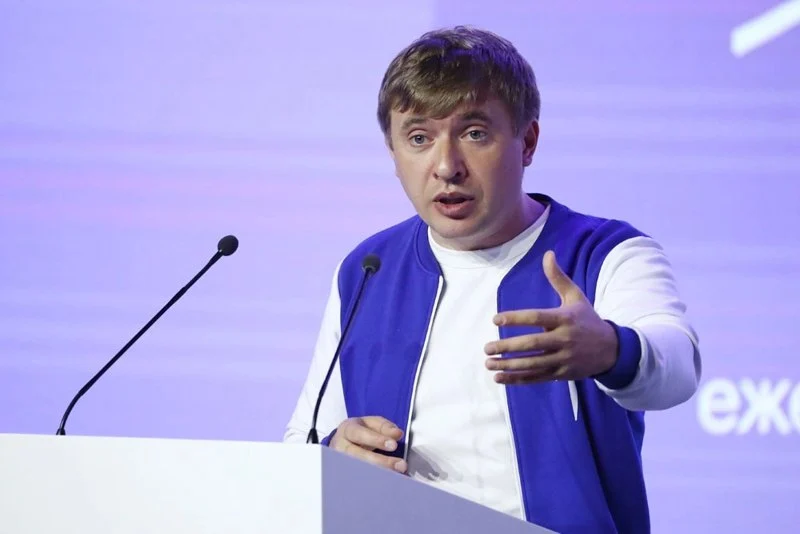

https://patriotkuban.ru/press-tsentr/novosti/details.php?ELEMENT_ID=15683, archive https://archive.ph/wip/dSEhi
One of the key coordinators of this work is the Federal Agency for Youth Affairs (Rosmolodyozh). Through Rospatriotcentre, which is subordinate to it, a significant share of federal projects in the field of patriotic education for children and young people is implemented.
It is Rospatriotcentre that organises nationwide patriotic forums, provides training for leaders of military-patriotic clubs, develops methodological materials, runs the “Dialogues with Heroes” project, the “Be, Not Seem” mentoring competition, and supports other programmes aimed at raising “patriots”, including programmes involving MPCs. Rospatriotcentre also works closely with the “Voin” Centre for Military and Sports Training and Patriotic Education and is one of its co-founders. In particular, under the “Your Hero” project, demobilised participants in the so-called “special military operation” are employed at branches of the “Voin” Centre, while Rospatriotcentre runs the “Be, Not Seem” mentoring competition jointly with the management and instructors of the “Voin” Centre.
The Ministry of Education, the Ministry of Science and Higher Education, the Ministry of Defence and other Russian state bodies are also involved in specific areas of work related to MPCs.
Who Works with the Children
An important part of the work of MPCs is the regular involvement of people with military backgrounds. Club leaders, mentors and instructors in the TOT are often combat veterans, former intelligence officers, paratroopers and border guards, heads of local branches of DOSAAF Russia and the “Young Army”, and, since 2022, participants in the so-called “special military operation”. For example, at one club in Crimea, training is provided by veterans of military intelligence and special forces units, while sports and military camps are organised for children under the names “School for Young Intelligence Officers” and “Training for Young Combat Swimmers: Sea Lions”.
Russia is creating specific opportunities for participants in the war against Ukraine to enter the system of patriotic education as mentors, teachers and heads of relevant clubs.

One illustrative example is the “Vershina” (“Summit”) Centre for Military-Patriotic Education, established in 2023 at the State University of Education following a proposal from the Ministry of Education that was supported by the Russian president. Among its tasks are retraining, further training and professional development for participants in the so-called “special military operation” so that they can work with young people, effectively integrating them into the education system. The centre offers, among other programmes, a professional retraining course entitled “Activities of the Head of a Military-Patriotic Education Club in a General Education Institution”, designed specifically for Russian military personnel who fought against Ukraine. Upon completing the course, they receive a qualification as a supplementary education teacher.
“Vershina” also trains participants in the so-called “special military operation” to teach “Fundamentals of Security and Defence of the Motherland”. It is these teachers who most often run MPCs based in schools. A separate programme focuses on the psychology of interpersonal communication – skills needed for working with children and young people.
At the same time, Rosmolodyozh and Rospatriotcentre are building a broader mentoring system that also actively involves combat veterans. For example, in the nationwide mentoring competition “Be, Not Seem”, held since 2024, the listed categories of participants explicitly include members and heads of patriotic and sports organisations and associations, including military-patriotic clubs.
Participants in the so-called “special military operation” are becoming more than just heroes of individual “Lessons of Courage” or “guests of honour” for children and young people. Russia is creating conditions in which they can turn their own military experience into a profession as mentors, teachers or heads of military-patriotic clubs. For children in the TOT, it is especially dangerous that the people becoming their educators and mentors are those who took part in the war against their own country. They not only pass on their own military experience to our children, but also foster loyalty to Russia and its army, effectively imposing a model in which a Ukrainian child is expected to regard the occupying state as their own country and be ready to serve in its army and fight against their own homeland. MPCs themselves become one of the places where this model is passed directly on to children.
From Individual Clubs to a Controlled System
Despite the scale of the network of MPCs, their activities in Russia are still not regulated by a separate legal act. At the same time, MPCs operate within the general legal framework, including the laws “On Public Associations” and “On Military Duty and Military Service”, as well as other regulations governing education, youth policy and patriotic education.
Since 2000, their activities have been regulated to some extent at the federal level by the Russian Government resolution “On Military-Patriotic Youth and Children’s Associations”. Importantly, the document formally regulates military-patriotic associations, rather than clubs as a separate organisational and legal form.
At the same time, the list of tasks set out in the resolution gives a fairly clear picture of how Russia viewed this sphere as far back as the early 2000s. These included participation in implementing state policy on military-patriotic and civic education, fostering in young people a readiness to serve the state and defend it by force of arms, studying history and culture, passing on the traditions of the Russian military, supporting children’s physical development, countering manifestations of political and religious extremism among young people, and, separately, preparing citizens for military service. In other words, the very principle of using children’s and youth organisations for military-patriotic education and preparation for service was built into Russia’s legal framework in the 2000s. Today, Russia is trying not simply to preserve this system, but to make it more standardised, coordinated and controlled.
A telling example in this context is the Package of Measures for the Patriotic and Spiritual and Moral Education of Young People in the Russian Federation through 2028, developed by Rospatriotcentre. The document sets out a number of changes specifically concerning MPCs: the development of a standard model for their operation, guidance materials and educational programmes, as well as proposals for regulating the activities of such associations. It also calls for proposals on keeping records of military-patriotic clubs and for the development of statistical monitoring of patriotic education.
Particular emphasis is placed on personnel. The package provides not only for involving participants in the so-called “special military operation” in the work of existing MPCs, but also for specialised professional training for veterans, including for the establishment and organisation of military-patriotic clubs.
Plans for standardisation are already moving into practice. In August 2026, a seminar is planned in Altai Krai for 140 leaders, instructors and activists from military-patriotic clubs. Its stated aims include assessing staffing, equipment and methodological challenges faced by MPCs, standardising basic operating principles while taking regional differences into account, developing mechanisms for the systematic involvement of veterans in the regular work of clubs, and training club leaders in methods of working with young people.
This article is the first in a series on military-patriotic clubs in the temporarily occupied territories of Ukraine. In subsequent articles, we will look in more detail at how this system operates in different occupied regions, who is behind particular clubs, and what kind of work they do with children.
The article was prepared by the Centre of Civil Education Almenda (CCE Almenda) as part of the project “Education Under Occupation: Holding Those Responsible for the Militarization and Indoctrination of Ukrainian Children Accountable.” The content of this publication is the sole responsibility of CCE Almenda and does not necessarily reflect the views of Civil Rights Defenders.


